
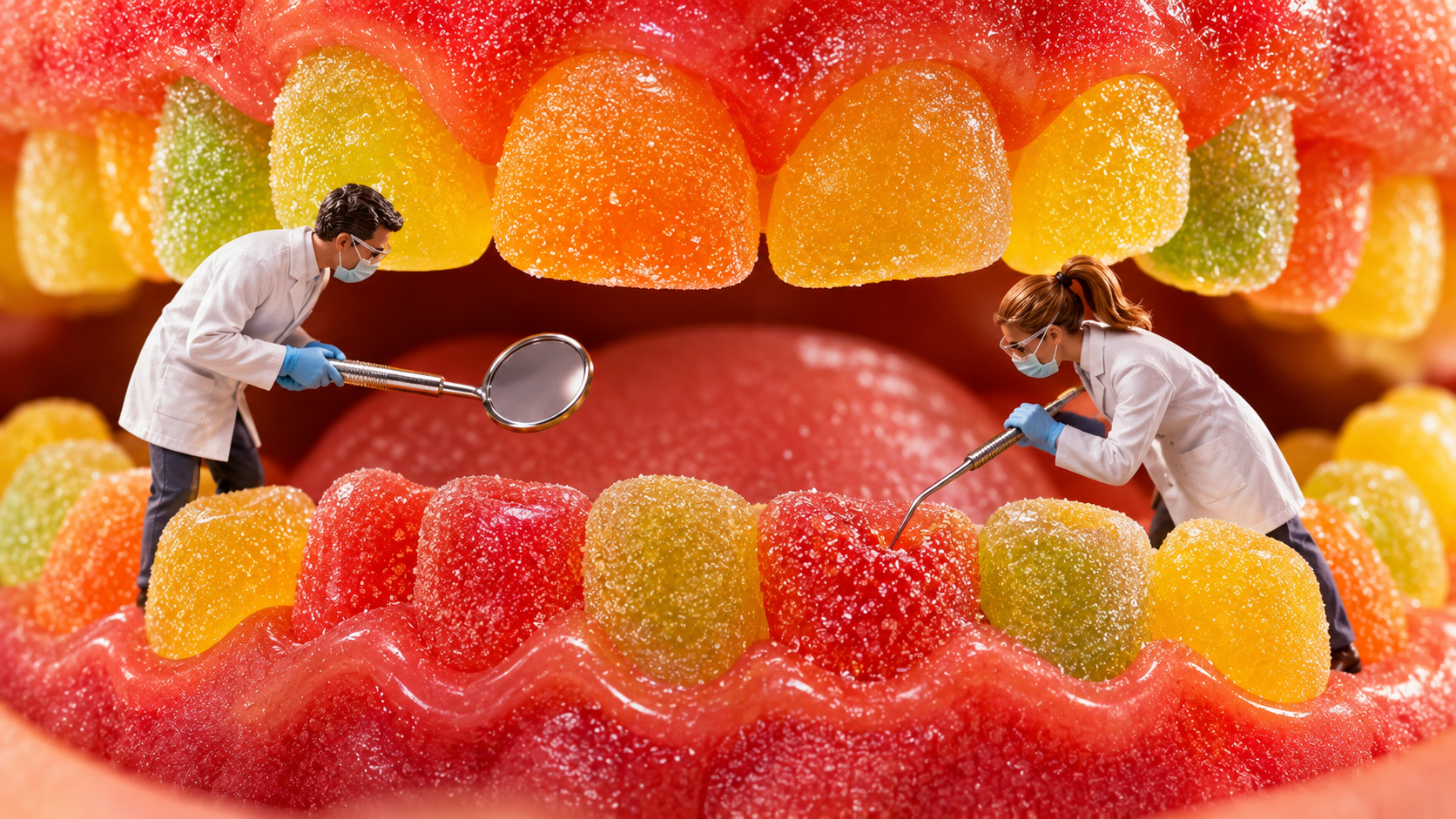
Gum Disease, Gingivitis & Periodontitis Treatments in Australia
If you’re aged between 18 and 64, there’s basically a 20% chance you have issues with your gums. Worldwide, oral disease affects nearly half the population – more than 3.5 billion people. More than a billion suffer from severe periodontitis.
Gingivitis is the earliest indicator of gum disease. It’s also the easiest to treat and beat. One of the most important reasons for regular 6-monthly dental appointments is to ensure there’s no accumulation of plaque and bacteria below the gum line. Where you can’t see it. And not everyone has symptoms of tender or bleeding gums as an oral health alert. Without it, plaque and tartar build-up steadily bcontinues; still without obvious discomfort or pain.
That’s why a probe is used to check gum pocket depth, because it can be asymptomatic.
Only the the skill of a dentist can identify, and properly treat it. One-to-three millimetres is firm, fitted, pink healthy gum. Four millimetres is gingivitis, usually treated by a professional dental clean. Just one more millimetre – one – is advanced gum disease.
Five millimetres is where the supporting bone and soft tissue of the tooth has already been broken down by bacteria. It’s a transition that can turn simple gingivitis into irreversible, bone-destroying, life-changing periodontitis in a matter or months, or a few years; depending on genetics, lifestyle and oral hygiene routines and habits.
Gum recession isn’t always gum disease, either.
It can be a hereditary predisposition with some people born with insufficient gingiva. Which means that the muscle of the alveolar mucosa isn’t stopped from pulling the gum, and it simply continues to slowly retract. Cigarettes can cause gum tissue to recede. The reduced saliva production of cannabis smoking can cause xerostomia (dry mouth), which in turn allows faster plaque build-up. Long-term use shows a significantly greater risk of clinical attachment loss (CAL) which is a measurement of the loss of the structural support of the tooth, and the receding gum.
Aggressive brushing or brushing with hard bristles – manual or electric – can certainly result in receding gums that doesn’t denote disease. So often the bristles, soften the pressure.
Periodontitis has now been added to the grouping of autoimmune disorders. It’s a recent change. Not only is the chronic inflammation of the disease recognised as the body attacking itself and increasing the risk of developing multisystemic issues, but it has led to new research.
Currently, treating gum disease begins with periodontal charting, which maps the entire mouth.
Every tooth has its pocket depth measured from six points around the base. Bleeding points, looseness and gum recession are all recorded. Three main types of x-rays are also used: bitewing, periapical and orthopantomogram. (OPG). The first shows the height of the alveolar bone between the upper and lower back teeth. Periapical x-rays take an image of the entire tooth from root tip to crown, checking for below gum line abscesses and infections, as well as detailing the bone support of specific teeth. OPGs give a complete, single image overview of the upper and lower jaw, joints, teeth and facial bones with a widespread view of bone density levels.
Complex cases sometimes require a 3D scan.
This gives a highly detailed image of what remaining structures are supporting each tooth, and is achieved by technology known as a Cone-Beam Computed Tomography (CBCT). It rotates around the patient’s head taking hundreds of pictures to create a 3D model. It affords the dentist or periodontist a high-resolution 3D view that can be real-time manipulated from any angle. Layers are able to be removed on screen to see what’s happening below the gum line.
A teenage girl chewing tree resin 10,000 years ago tells us that severe periodontitis has been with us since at least then. In all that time, we still don’t know how to cure it.
Antimicrobial therapy can be prescribed. Chlorhexidine mouthwashes are used, or a flexible cannula applies an antibiotic gel into the affected dental pockets. As a sustained release, this biosorbable material is active over 7 to 14 days. It’s usually administered after scaling and root planing – a deep cleaning procedure where numbing agents are used so that subgingival plaque and tartar can be removed with more comfortably.
Much less invasive than flap surgery, bone and tissue grafting, and tissue regeneration; the arsenal of gum disease treatments for decades. From antibiotics to surgeries, they’re options that only manage or greatly slow the progress of the disease rather than eradicating it. They’re conventional remedies that in raw terms monitor and remove the bacterial infection, and restrict or rebuild bone loss.
Experimentation with natural ingredients like quercetin, resveratrol, baicalin and curcumin have shown some good results, but most have poor solubility and safety issues.
There’s high promise in nanotechnology as a delivery system in the complex treatment of this disease.
An essential trace mineral, copper, plays a crucial role in maintaining a healthy central nervous system, strong bones and connective tissue. It supports red blood cells and immune function. Research has proven the importance of copper in gum care and repair, infection prevention and long-term good dental health. Smart hydrogel can control the release of nanomedicines through stimuli-responses, including a variety of changes in chemical composition. Nanoparticles address the challenge of drug absorption by rest of the body by ensuring stable cell targeting for periodontal disease. The release of the active ingredients into specific periodontal pockets reverses the excessive immune response that’s causing the damage to gum and bone tissue.
Copper ion oxidation has antibacterial properties and it’s an element that repairs all the tissue and supports that surround the tooth: alveolar bone, gingiva, periodontal ligament and cementum.
Spurred on by the new classification of an autoimmune disease, the University of Pittsburgh School of Dental Medicine researchers focused on the immune system and delivered microparticles containing an immunomodulator protein (CCL2) directly into the gums of mice. The inhibited bone loss and levels of accelerated repair at particular stages of the disease brought breakthrough understanding into immune system and microbiota interaction.
What drove the results were changes in the way in which white blood cells engulfed and destroyed and removed the microorganisms, and stimulated an immunity response.
Research scientists at NYU College of Dentistry have developed a gel designed to block the succinate receptor – high levels of which allow gum disease. Using human gum cells, lab tests showed that inflammation and bone loss were reduced by the gel. Applying it to the diseases gums of mice had significant positive results in just a few days. One test recorded that gel application every second day for four weeks doubled the bone retention of mice not undergoing any treatment.
It also changed the mouth microbiome of the mice, without acting as an antibiotic. Certain pathogens were reduced and inflammation was regulated, largely lessening its biological load.
As an available treatment option, it’s expected around 2032.
The low incidence of oral disease happened in our pre-history. Presently, it’s the world’s sixth most prevalent health disorder. Diet and food texture are enormous contributors to a dysbiotic oral microbiota and changes in the mechanics of mastication – both of which bring imbalance and ill health. Taking responsibility for the enormous impact what we put in our mouth has on our wellbeing, is a useful perspective for improved oral health.
Until technology brings better, permanent treatments for gum disease and periodontitis the best one is to not get it in the first place.
The best way to do that, is to see your Sunbury dentist every six months.